

By Stellar Gel The Intersection of Cosmetic Chemistry and Professional Nail Technology
Adhesion. It is the Holy Grail of the nail industry.
We all want that 4-week, rock-solid retention where the nails don't budge until we decide to rebalance or soak them off. But when a nail lifts or pops off, we tend to blame the "bad glue" or the "oily nail bed."
In reality, adhesion is a specific physical and chemical relationship between two surfaces: the Natural Nail Plate (Keratin) and the Artificial Enhancement (Gel).
To master retention, you need to stop thinking of gel like paint, and start thinking of it like a construction project. Gel bonds to the nail in two distinct ways: Mechanical Interlocking and Chemical Bonding.
If you understand how these two forces work together, you will never have a "mystery lift" again.
1. Mechanical Interlocking: The "Velcro" Effect
This is the physical side of adhesion.
Imagine trying to stick duct tape to a sheet of glass. It sticks, but if you pull the edge, it peels off smoothly. Now, imagine sticking duct tape to a piece of rough sandpaper. It grips tight. It’s hard to remove.
The Science:
The natural nail plate is naturally smooth and shiny. This is terrible for adhesion because there is nowhere for the gel to "grab."
When you buff the nail (gently!) with a 120 or 180-grit file, you are scratching the surface. Under a microscope, those scratches look like deep canyons and valleys.
How It Works:
-
Flow: You apply the Base Coat or Structure Gel. The liquid gel flows deep into those microscopic canyons.
-
Cure: You put the hand in the lamp. The liquid hardens into a solid.
-
Lock: The gel is now physically trapped inside the texture of the nail. It has formed thousands of tiny "roots" or "anchors."
This is Mechanical Interlocking. It is the reason why "roughing up" the nail is a standard prep step. You are creating surface area for the gel to hold onto.

2. Chemical Bonding: The "Magnet" Effect
Mechanical adhesion is strong, but it isn't enough on its own. If the nail gets wet and swells, those mechanical anchors can slip. That is where Chemical Bonding comes in.
This is the job of your Primer and your Base Coat.
The Science:
Gel is a polymer (plastic). The nail is keratin (protein). Chemically, they are strangers. They don't naturally want to hold hands.
To make them stick, we use adhesion promoters—molecules designed to be chemically compatible with both sides.
How It Works (The "Double-Sided Tape" Theory):
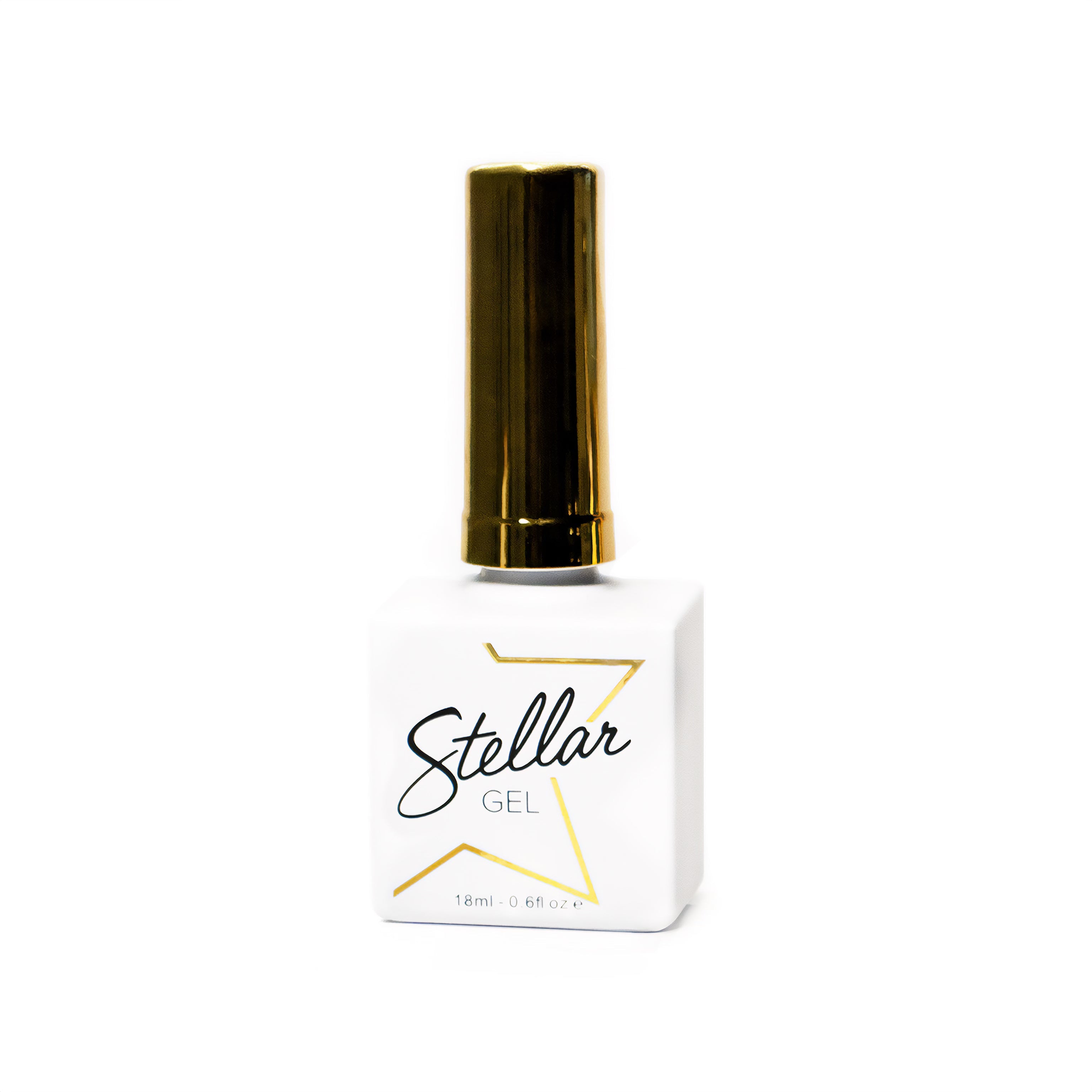
Your Stellar Gel Bond contains specialized molecules with two distinct ends:
-
Head (Hydrophilic/Keratin-Loving): This end loves the natural nail. It seeks out the amino acids in your keratin and forms hydrogen bonds or covalent bonds with them.
-
Tail (Hydrophobic/Methacrylate-Loving): This end loves the gel. It has a chemical "hook" that stays open, waiting to link up with the wet gel you apply on top.
When you cure your base coat/structure gel over the primer, you are chemically welding the plastic to the protein.
The HEMA Factor in Adhesion
We talk a lot about HEMA (2-Hydroxyethyl Methacrylate) being an allergen, but we also have to respect why it was used for 30 years.
HEMA is a very small molecule that is excellent at Both types of adhesion:
-
Mechanical: Because it is tiny, it flows deep into the smallest scratches of the nail plate.
-
Chemical: It is highly reactive and bonds aggressively to keratin.
The HEMA-Free Challenge:
When you switch to our Stellar Gel Made in USA (3-Free) line, you are using larger molecules (Di-HEMA/Bis-HEMA).
-
The Challenge: Big molecules don't flow into microscopic scratches as easily as tiny HEMA does.
-
The Solution: This means PREP IS KING. With HEMA-Free gels, you cannot skip the bond, and you must ensure your mechanical buffing is thorough (but gentle). The chemical bond provided by Stellar Bond becomes even more critical when you don't have the "deep soak" of HEMA.
The Enemy of Adhesion: Surface Contaminants
You can have the best mechanical prep and the best chemical bond, and the nail will still lift if there is a barrier in the way.
1. Oil (Sebum):
Oil is a bond blocker. If there is oil in the scratches you created, the gel can't flow into them. The mechanical lock fails.
-
Fix: Use pure Acetone or Cleanser and scrub the plate.
2. Water (Moisture):
The nail plate acts like a sponge. If the nail is full of water, the primer molecules can't find the keratin to bond with.
-
Fix: Use a Dehydrator. Watch for the "chalky white" return of the nail color. That signals the moisture is gone.
3. Dust:
If you file the nail and leave the dust sitting on the plate, the gel bonds to the dust particles, not the nail. The dust lifts off, taking the gel with it.
-
Fix: Brush downward firmly with a stiff nylon brush, and cleanse with a lint-free wipe.

Conclusion: The Perfect Marriage
The best retention comes from a marriage of physics and chemistry.
-
Mechanical: Use a 180-grit sponge buffer or file to remove shine and create texture (anchors).
-
Chemical: Use Stellar Gel Bond to create the molecular bridge (magnets).
-
Clean: Ensure no oil or dust gets in the way of the wedding.
When you respect the science of adhesion, you stop hoping the nails will stick, and start knowing they will.
Disclaimer: This article is for educational purposes. Over-filing the nail plate (using too coarse a grit) damages the keratin and actually weakens adhesion over time. Always use a light hand.