

By Stellar Gel The Intersection of Cosmetic Chemistry and Professional Nail Technology
In the salon, we usually categorize gels by how we remove them:
-
"Soak-Off" (Soft Gel)
-
"File-Off" (Hard Gel)
But why does one dissolve in acetone while the other laughs in its face? Why can you wear soft gel on short nails, but need hard gel for long stilettos?
It isn't magic. It's Cross-Linking.
At Stellar Gel, we believe you should choose your product based on the molecular structure your client needs, not just how you want to take it off. Today, we are zooming in to the microscopic level to explain the difference between the "Spider Web" (Soft Gel) and the "Chain Link Fence" (Hard Gel).
1. Soft Gel (Soak-Off): The "Spider Web"
Most modern builder gels (like BIAB-style products and our Stellar Structure Gel) are Soft Gels. Even though they cure hard and strong, chemically, they are "soft."
The Chemistry:
Soft gels are formulated with molecules that have a lower Cross-Linking Density.
Imagine a spider web. The strands are connected, but there are plenty of gaps and holes between them.
Why It Soaks Off:
When you wrap the nail in acetone:
-
The acetone molecules are small enough to wiggle into those gaps in the spider web.
-
The gel absorbs the solvent and swells up like a sponge.
-
This swelling creates internal pressure that pushes the polymer chains apart until they crack and crumble.
-
You scrape off the mush.
The Benefit:
-
Flexibility: Because the web isn't woven super-tight, the gel has "give." It can bend and flex with the natural nail. This makes it ideal for natural nail overlays and short extensions.
2. Hard Gel (File-Off): The "Chain Link Fence"
Traditional Hard Gel (or "Buff-Off Gel") is the original UV gel technology.
The Chemistry:
Hard gels use monomers with multiple reactive arms (functional groups) that create a High Cross-Linking Density.
Imagine a chain-link fence made of steel, or a tightly woven basket. The molecules are locked together in a dense, impenetrable grid.
Why It Doesn't Soak Off:
When you put acetone on hard gel, the molecules say, "Nice try."
The grid is so tight that the acetone cannot penetrate. There are no gaps to enter. If the solvent can't get in, the gel can't swell. If it can't swell, it won't break down.
The only way to remove it is to physically destroy the bond by filing it off.
The Benefit:
-
Rigidity: Because the grid is tight, the gel is chemically rigid. It does not bend. This makes it mandatory for Long Extensions.
Physics Check: If you build a long stiletto nail with soft gel, it might bend when the client hits a button. If it bends too far, it snaps. Hard gel stays stiff, absorbing the shock without deforming.

The Hybrid: "Semi-Hard" Gels
Modern chemistry (like what we use at Stellar Gel) is blurring the lines.
We can now engineer Structure Gels that are technically Soak-Off (Soft), but have a cross-linking density high enough to mimic the strength of a Hard Gel.
-
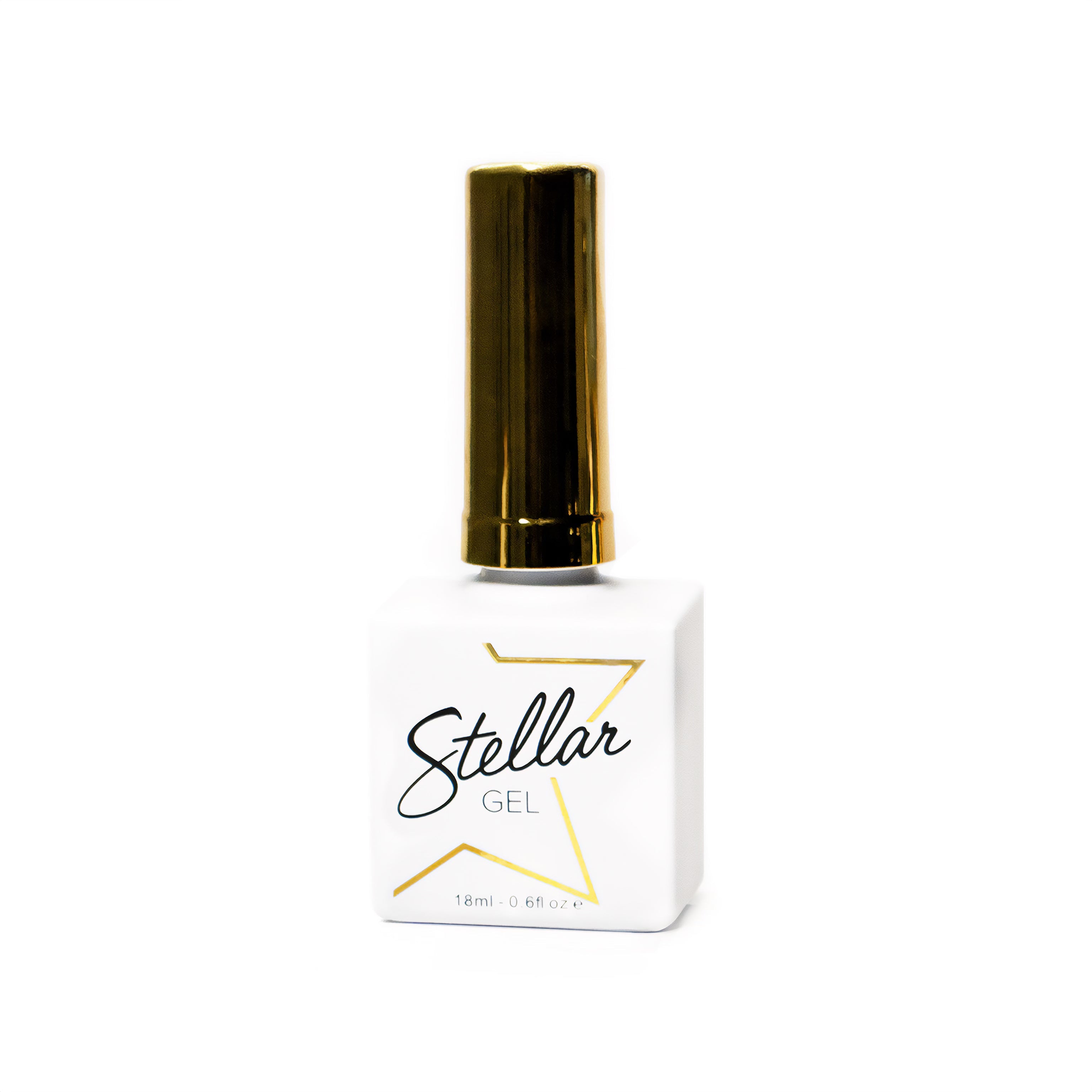
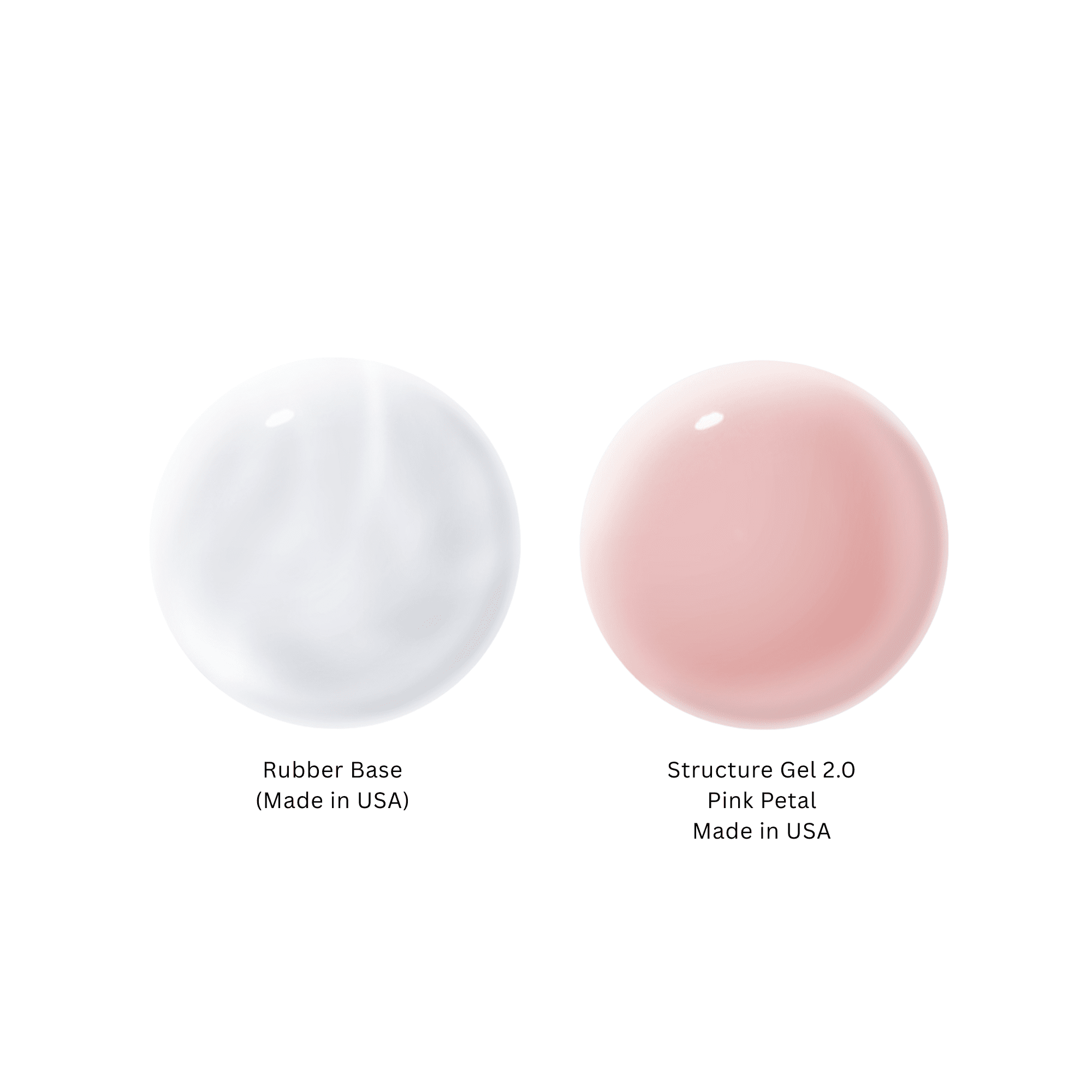
Stellar Gel Structure (Made in USA): This is a "firm" soft gel. It has the flexibility to move with the natural nail (preventing lifting) but enough structural integrity to hold a short-to-medium extension.
Why choose a Hybrid?
It gives you the safety of a soak-off removal (less risk of filing damage) with the durability closer to a traditional hard gel.
How to Choose for Your Client
Stop asking "How do you want to remove it?" and start asking "What is your lifestyle?"
Client A: The Natural Nail Grower
-
Goal: Wants to grow her own nails to a medium length.
-
Need: Soft Gel (Structure). Her natural nails will bend when wet. She needs a coating that bends with her. If you put rigid hard gel on flexible natural nails, it will separate and lift at the free edge.
Client B: The Stiletto Queen
-
Goal: Wants XL extensions glued on or sculpted.
-
Need: Hard Gel. The extension has no natural support. It needs the structural rigidity of hard gel to prevent snapping in half when she opens a car door.
Client C: The Picker
-
Goal: Needs something she can't peel off.
-
Need: Hard Gel. Because acetone doesn't melt it, her saliva and picking habits won't budge it either. (Just warn her: if she pries it off, she takes the nail plate with it!)
Conclusion: Use the Right Tool
There is no "better" gel. There is only the correct gel for the physics of the job.
-
Soft Gel = Flexibility & Solvent Porosity.
-
Hard Gel = Rigidity & Solvent Resistance.
At Stellar Gel, our specialty is the Advanced Soft Gel—formulated to give you the maximum strength possible while maintaining the safety option of soaking off.
Find your strength:
Shop our hybrid-strength Structure Gel Collection today.
Disclaimer: This article is for educational purposes. Always check the manufacturer's instructions for removal. Attempting to pry off hard gel can cause severe damage.