

By Stellar Gel The Intersection of Cosmetic Chemistry and Professional Nail Technology
You paint a perfect line of colour right up to the cuticle. You cap the free edge beautifully. It looks flawless.
You tell your client to put their hand in the lamp. Sixty seconds later, they take it out, and you stare in confusion.
The colour has retreated. There is a tiny gap at the cuticle where it used to be perfect. The free edge you capped is now bare, revealing a white line of natural nail.
Did the gel move? Did it run?
Actually, it Rank.
This phenomenon is called Polymerization Shrinkage. It is an unavoidable law of physics, but it drives nail techs crazy. The good news? Once you understand why molecules get closer together when they harden, you can learn how to stop them from ruining your manicure.
The Science: The "Group Hug" Effect
To understand shrinkage, we have to look at the molecules inside the bottle.
1. The Liquid State (Social Distancing)
In the bottle, the gel is made of loose monomers and oligomers. They are floating around, bumping into each other, but they have personal space. They are held together by weak forces (Van der Waals forces) that leave plenty of room between them.
2. The Cure (The Group Hug)
When the UV/LED light hits the photoinitiators, it triggers a chain reaction. The molecules stop floating and start linking. They form strong Covalent Bonds.
To form these bonds, the molecules have to pull each other tight. They snap together like magnets.
The Result:
As billions of molecules pull themselves closer together to form a solid chain, the total volume of the product decreases. The gel physically contracts.
Depending on the formula, a gel can shrink anywhere from 2% to 20% during the cure.

Why Does It Pull Back from the Tip?
You might think the gel would shrink down (get thinner), and it does. But it also shrinks inward.
Imagine a sheet of plastic wrap stretched over a bowl. If you heat it and it shrinks, it pulls away from the edges toward the center.
The gel does the same thing. As it tightens, it pulls away from the free edge and the cuticle, moving toward the center of the nail plate where the bulk of the product is.
Factor 1: The Chemistry (Small vs. Large Molecules)
Not all gels shrink the same amount. The biggest factor is the size of the molecules you are using.
-
HEMA (The Shrinker): HEMA is a tiny monomer. To make a solid plastic out of HEMA, you need to link billions of them together. That means billions of gaps closing up.
-
Result: High Shrinkage. This is why cheap, HEMA-heavy base coats often pull back significantly.
-
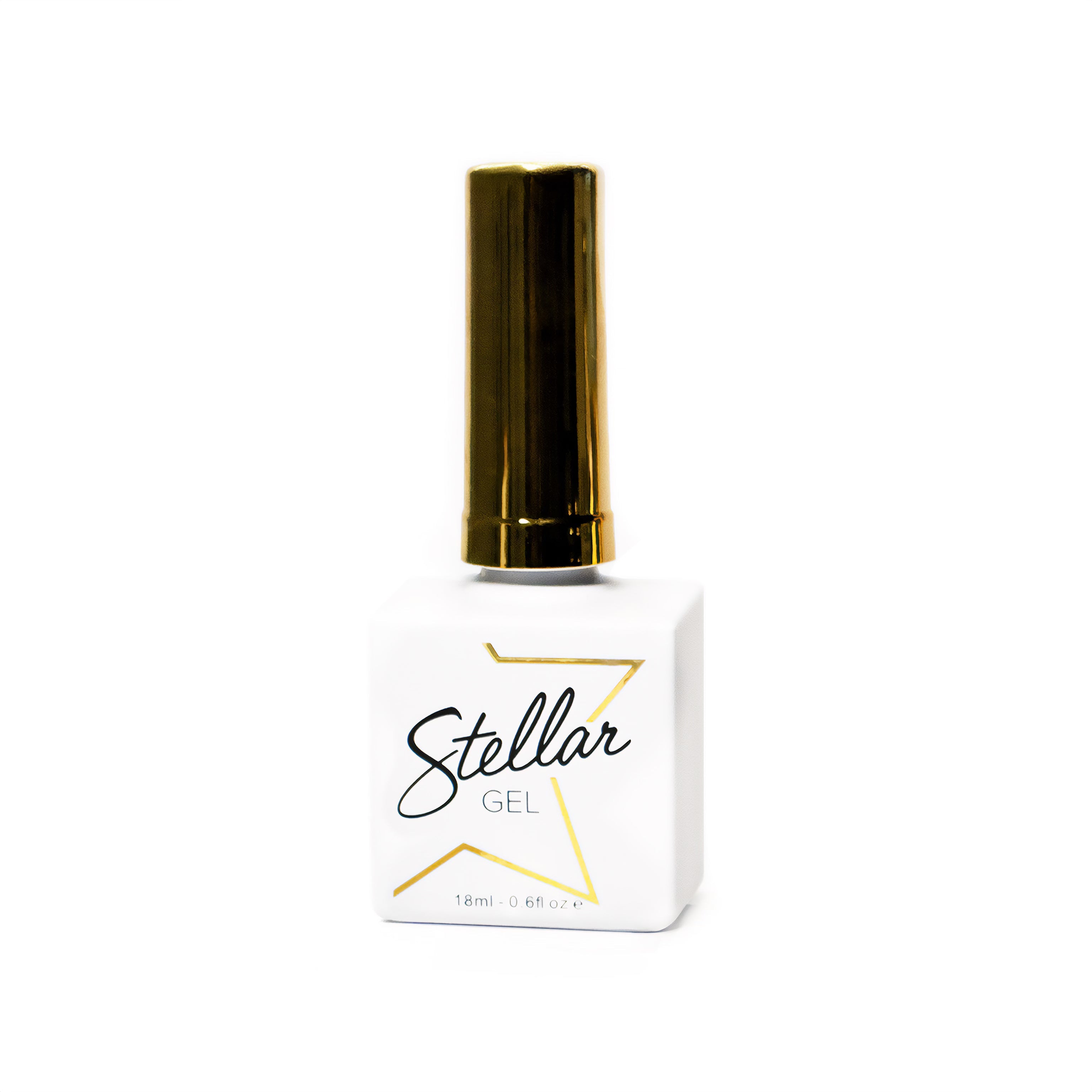
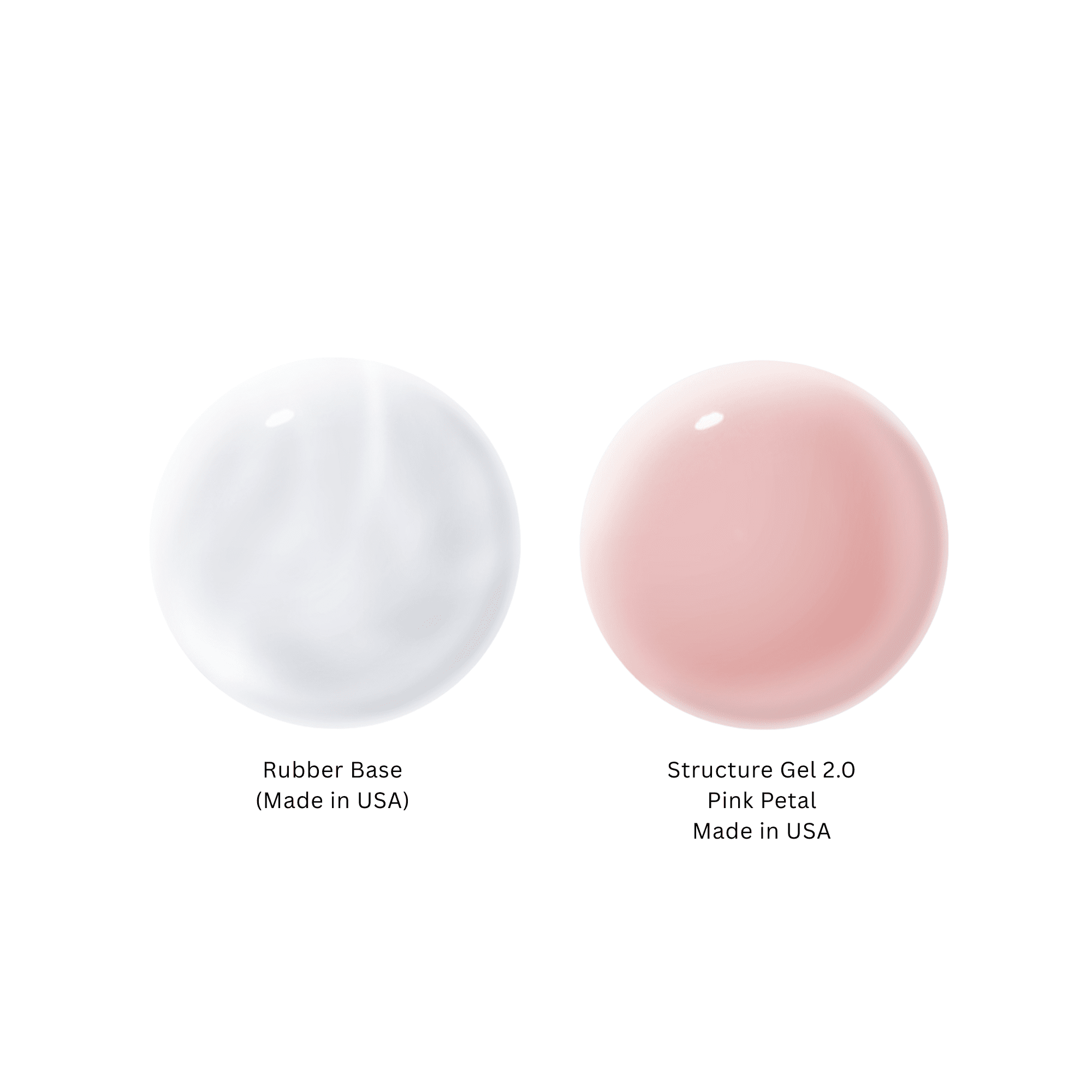
Oligomers (The Stable Choice): Our Stellar Gel Made in USA line uses large oligomers (Di-HEMA/Bis-HEMA). These are long chains that are already linked before you even open the bottle. Because the chains are already built, there are fewer gaps to close during the cure.
-
Result: Low Shrinkage. The product stays exactly where you put it.
The Stellar Advantage:
If you struggle with shrinkage, switching to our Made in USA (3-Free) line can solve the problem simply by changing the physics of the product.
Factor 2: The Application (Thick vs. Thin)
The more product you have, the more shrinkage you get.
If you apply a thick layer of colour, the shrinkage force is stronger. The massive amount of molecules pulling together can generate enough force to physically pull the product back from the slippery free edge.
The Fix:
-
Two Thin Coats > One Thick Coat.
-
A thin coat has less mass, generating less "pulling" force. It cures in place, creating a sticky anchor layer. The second coat then bonds to that anchor, preventing it from moving.
How to Stop the Shrink: 4 Pro Techniques
You can't change physics, but you can outsmart it. Here is how to keep your lines crisp.
1. The "Freeze" Cure (Flash Curing)
The longer wet gel sits on the nail, the more it can move. But shrinkage happens during the cure.
-
Technique: Paint one or two nails, then immediately flash cure for 10 seconds.
-
Why: This "locks" the polymer network in place before it has time to pull back significantly. If you paint all 5 fingers and then cure, the thumb has had time to settle and slide, and the shrinkage will be more pronounced.
2. Cap the Free Edge... Twice
Since the free edge is the most slippery part of the nail (it’s smooth keratin), the gel loves to pull away from it.
-
Technique: Cap the free edge with your Base Coat, then your Colour, then your Top Coat.
-
Why: Creating a foundation layer gives the color something to grip onto so it can't slide back.
3. Buff the Tip
If the free edge is super shiny and smooth, the gel can't grip it against the force of shrinkage.
-
Technique: Lightly buff the free edge of the natural nail with a 120 or 180 grit file during prep.
-
Why: Texture increases surface area and mechanical grip, helping the gel fight the shrinkage pull.
4. Remove the Inhibition Layer (For Nail Art)
If you are painting detailed art or a French tip, painting over a slippery inhibition (sticky) layer can cause the art to shrink or "bead up."
-
Technique: Wipe the sticky layer off the base colour with cleanser (or use a matte top coat) before painting your French tip.
Why: Paint sticks better to a dry, textured surface than a wet, slippery one.

Conclusion: Shrinkage is a Sign of Cure
Remember, shrinkage isn't a defect; it's proof that a chemical reaction is happening. It means your gel is curing tightly.
However, you shouldn't have to fight your product. By using Low-Shrinkage Formulas (like Stellar Gel’s oligomer-rich systems) and applying in thin, controlled layers, you can ensure that the manicure you see before the lamp is the exact same one you see after.
Ready for stability?
Try our Made in USA Collection for a low-shrink, high-control application.
Disclaimer: This article is for educational purposes. Severe shrinkage can sometimes indicate that a product has been exposed to heat or light during storage.