
By Stellar Gel The Intersection of Cosmetic Chemistry and Professional Nail Technology
It is the moment every nail technician dreads. You have just finished perfecting the apex on a beautiful structure gel overlay. The application is flawless. You slide your client’s hand into the lamp, confident in your work.
Three seconds later, the client yanks their hand out, waving it frantically. "It burns! It burns!"
The panic is real. The client is in pain, you feel terrible, and the peaceful atmosphere of the service is shattered. This phenomenon, known in the salon as a "heat spike," is technically called an exothermic reaction. It is one of the most common complaints in the era of Builder In A Bottle (BIAB™) and strong structure gels.
But here is the truth: heat isn't a malfunction. It’s physics. It means the product is working. However, too much heat means the reaction is happening too fast for the body to handle.
As a professional using high-performance products like Stellar Gel, understanding the chemistry behind the burn is the only way to prevent it. In this deep dive, we are going to trade our nail brushes for lab coats to explain exactly why heat spikes happen, which of our products are guaranteed "low heat," and how to master the "controlled cure."
The Chemistry: What is an Exothermic Reaction?
To understand the burn, we have to look at what is happening on a molecular level.
Gel nail products ~ whether they are base coats, colors, or builders ~ are liquid polymers. Specifically, they are made of monomers (single molecules) and oligomers (short chains of molecules). These molecules are floating around in the bottle, unconnected.
When you place the hand in an LED or UV lamp, the light hits ingredients called photoinitiators. These photoinitiators act like the starter pistol at a race. They absorb the light energy and "explode" into free radicals, which tell the monomers to link up.
This linking process is called polymerization.
Here is the crucial part: Chemical bonds contain energy. When a liquid monomer snaps into place to become part of a solid polymer chain, it transitions from a high-energy state (liquid) to a lower-energy state (solid). The excess energy has to go somewhere. According to the laws of thermodynamics, energy cannot be destroyed; it can only change form.
In a curing gel, that excess energy is released as heat.

Every UV/LED gel releases heat when it cures. It is chemically impossible for it not to. So, why do some gels feel like a gentle warmth while others feel like a branding iron?
The Perfect Storm: 3 Factors That Create the "Spike"
A "heat spike" occurs when the exothermic reaction happens too quickly or too intensely for the nail bed to dissipate the temperature. Three main variables control the intensity of this heat:
1. Curing Speed (The HEMA Factor)
This is the biggest culprit. The faster a gel cures, the faster the energy is released. Imagine pouring a kettle of boiling water into a sink. If you pour it slowly over a minute, the drain handles it fine. If you dump the whole kettle in one second, it overflows and splashes.
HEMA (2-Hydroxyethyl Methacrylate) is a small monomer famous for curing incredibly fast. In high concentrations, HEMA causes the gel to "flash cure" in the first 5–10 seconds. This dumps all the heat energy into the nail plate instantly.
This is where Stellar Gel’s formulations differ.
-
Standard Formulas: Our traditional builder gels may contain HEMA to ensure rapid curing and maximum durability. These will naturally run warmer.
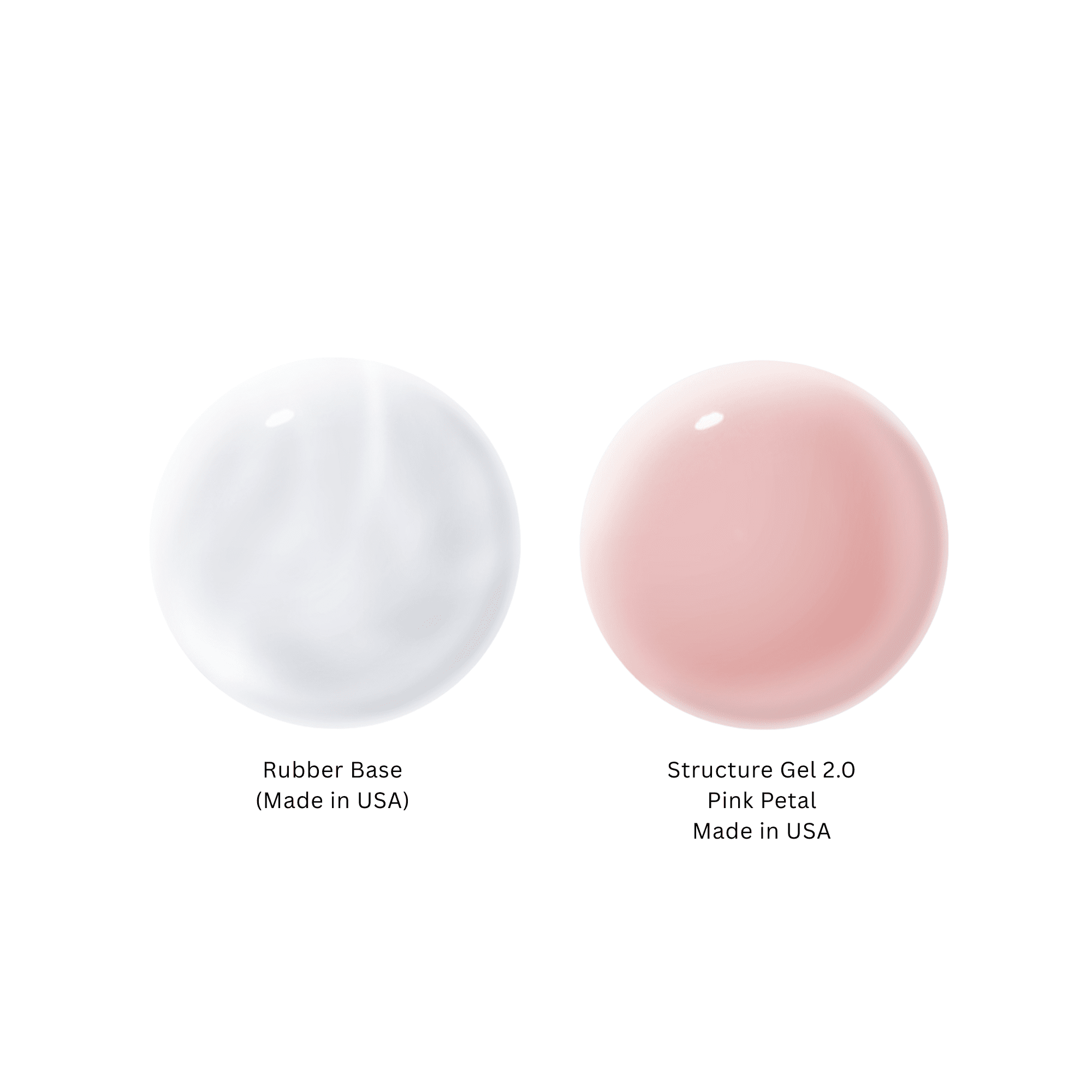
Made in USA & HEMA-Free: These specific collections are formulated with larger molecules that cure at a more moderate pace, spreading the heat release out over time so the client never feels a spike.

2. Product Density (The Insulation Effect)
This is why builder gels burn, but Gel Colors and Top Coats generally do not.
Why Color & Top Coats are "Cool":
Products like our Gel Colors, Extreme Shine Top Coat, HEMA Free Top Coat, and Shimmer Top Coats are applied in paper-thin layers. There simply isn't enough "fuel" (monomers) in that thin layer to generate significant heat, and whatever heat is generated escapes into the air instantly.
Why Builders Burn:
Structure/builder gels are formulated in a thicker consistency.
-
More Fuel: A thicker bead contains billions more reactive monomers. More reaction = more total heat.
Trapped Heat: Gel is an insulator. The heat generated at the bottom of the bead cannot escape through the thick goo on top. It has nowhere to go but down—straight into the client's nail bed. This is one reason why it is so important to apply your builder gels in thinner layers.

3. Lamp Intensity (Irradiance)
Modern LED lamps are powerful. Higher irradiance (light intensity) drives the photoinitiators harder, forcing a faster reaction. Using a high-wattage lamp on a fast-curing gel is a recipe for a heat spike.
The "Cool List": Products That Won't Burn
Not every bottle in your drawer is a fire hazard. If you have a client with ultra-sensitive nail beds, here is your Stellar Gel cheat sheet. The following products are formulated to be effectively heat-spike free:
-
All "Made in USA" Products: Our entire USA-manufactured line is engineered for a low-exothermic reaction.
-
Extreme Shine Top Coat: Due to its viscosity and application thickness, this cures cool.
-
HEMA Free Top Coat: Gentle formulation meets thin application.
-
All Shimmer Top Coats: Sparkle without the sting.
-
All Gel Colors: Because these are highly pigmented and applied thinly, they do not generate noticeable heat.
Why "Low Heat Mode" Matters
You have likely seen the "Low Heat Mode" or "99s Mode" button on your lamp. Do you know what it actually does?
It isn't just a longer timer. It is a pulse-width modulation program.
-
0–30 Seconds: The lamp pulses at roughly 25% power. This initiates the cure slowly.
-
30–50 Seconds: The lamp ramps up to 50% power.
-
50–99 Seconds: The lamp goes to 100% power to finalize the cure.
By throttling the light energy at the start, we prevent the photoinitiators from exploding into action all at once. For clients with thin, damaged, or sensitive nail beds, this mode is non-negotiable. It is also the best mode to cure very dark colours on. With dark colors and highly pigmented colors, light penetration is already limited. If the top layer cures too fast, it can block light from reaching the lower layers, leaving the inside under-cured. Using low heat mode allows more even light penetration, proper molecule bonding throughout the layers and provides stronger, longer lasting wear.
How to Manage the Heat: The Stellar Strategy
We cannot change physics, but we can manage it. As a Stellar Gel user, you have the tools to ensure a comfortable service.
1. Select the Right Formula
Customize your choice based on the client sitting in your chair.
-
For tough nails: Use our standard high-adhesion builder gels.
-
For sensitive nails: Reach for the Made in USA collection or our HEMA-Free builders. These are your best defense against heat spikes.
2. The Flash Cure Technique
If you are doing a thick overlay with a standard formula:
-
Apply your slip layer and bead.
-
Flash cure for 3 seconds.
-
Remove for 3 seconds.
-
Repeat 2–3 times before doing the full cure.
3. Educate Your Client
Before you cure, say this:
"Because this is a strengthening gel, it creates warmth while it hardens. If it gets too hot, do not keep your hand in. Pull it out immediately, press your fingertips down on the desk (pressure confuses the nerve endings), and put it back in when it cools."
Conclusion: Comfort is Professionalism
In the world of high-end nail services, client comfort is just as important as retention. By knowing which products in your arsenal are "cool curing" (like our Made in USA line and Top Coats) and using the right techniques for the stronger gels, you can master the exothermic reaction.
Ready to cool down your service?
Shop our Made in USA collection today for the ultimate low-heat experience.
Disclaimer: The information in this blog is for educational purposes for licensed professionals. Always follow the manufacturer's curing guidelines for your specific lamp and product system.